Lightweight, ductile, easy to machine… aluminum lends itself to a wide range of industrial uses, but it comes in a multitude of surface conditions: raw, anodized, polished, or painted. Each surface condition, each alloy, changes the equation when it comes to marking. On the shop floor, the constraints are demanding: cast parts, rough surfaces, dusty or vibration-prone environments. How can you guarantee marking that stays readable over time, whatever the configuration of your parts?
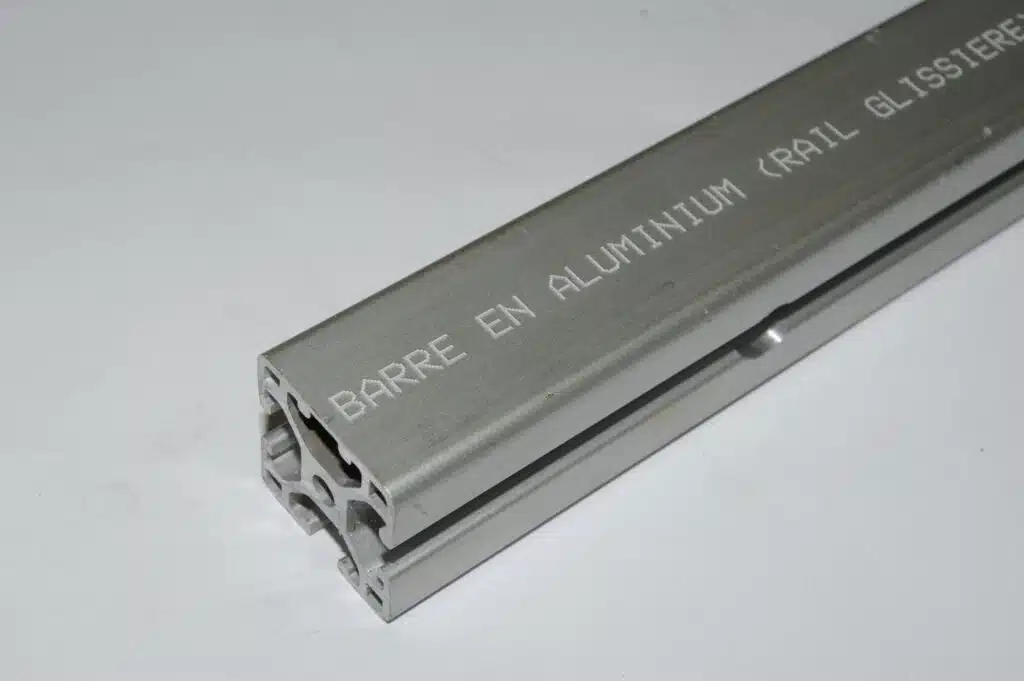
The diversity of aluminum surface conditions calls for constant adaptation of marking parameters. Three key requirements stand out for manufacturers working with this material:
We combine two complementary technologies to address the diversity of aluminum parts. The choice isn’t arbitrary — it depends directly on the surface condition and production context.
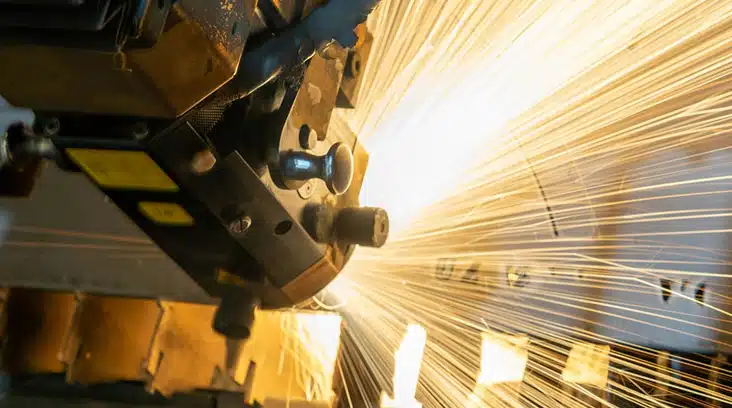
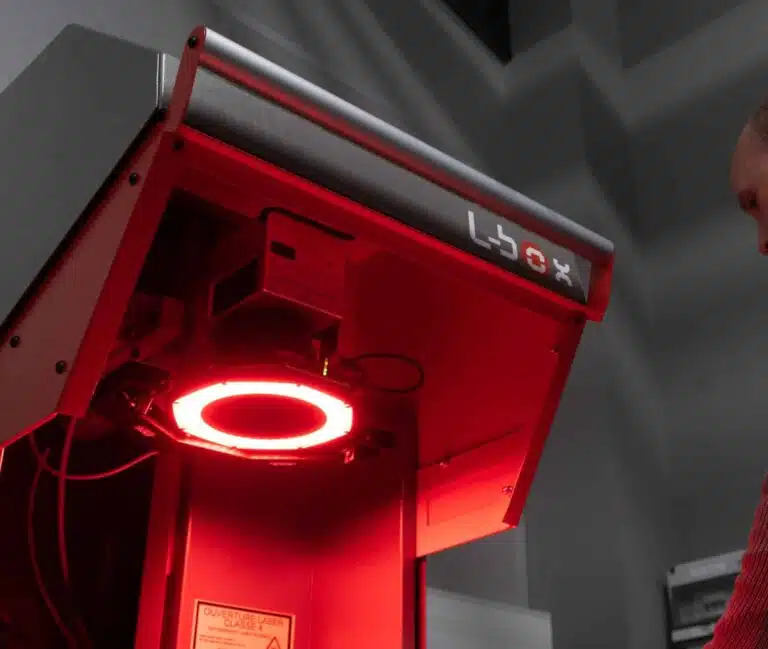
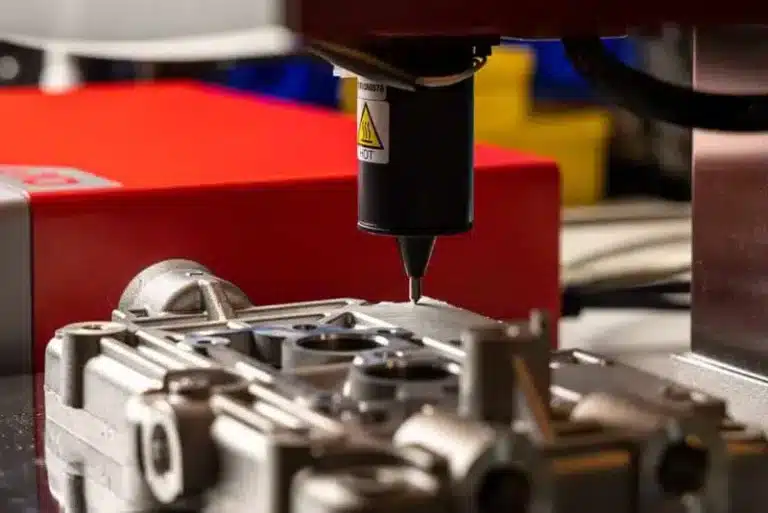
For cast parts and raw or irregular surfaces, we favor micro-percussion. This technology marks by indentation and holds up well even on rough or as-cast surfaces. For machined or anodized parts, laser marking delivers sharp contrast and precise contours, particularly well-suited to DataMatrix codes intended to be read by machine vision systems.
Beyond the choice of technology, it’s the match between the marking solution and the real production constraints that guarantees traceability reliability. We take into account the alloy and surface condition, as well as how the part will be used over time: vibrations, dust, repeated handling.
This tailored approach lets us offer the most relevant technology for each part, rather than a generic solution. This customization is what ensures marking durability and continuity of traceability, from the manufacturing station through to downstream inspection stages.
Are you marking aluminum and wondering which technology best suits your parts? Are your surfaces raw, anodized, or machined? Do your codes need to be automatically read on the production line?
We support you from the initial study of your application through to the commissioning of your marking solution, taking into account your alloys, surface conditions, and production constraints. Every aluminum part has its own specifics, our role is to provide the marking answer that lasts.
Article written with the technical expertise of Fabien Nicot, Technical Director, SIC Marking.
Need information?
Get in touch with one of our experts!