The durable marking in industry refers to a permanent industrial marking designed to maintain its readability, contrast, and integrity throughout the entire product lifecycle, regardless of the usage conditions, processing steps, or environmental exposure the part may undergo.
Ensuring marking durability relies on a comprehensive approach that includes the marking technology, the material type, the manufacturing process, post-marking treatments, as well as the strict requirements of permanent industrial traceability of parts.
The marking must remain usable throughout the entire product lifecycle, including after machining, painting, heat treatment, assembly, or exposure to harsh mechanical, thermal, or chemical environments.
Marking depth, contrast stability, abrasion resistance, and machine-readable performance—especially for DataMatrix codes or DPM (Direct Part Marking) applications—are key parameters to ensure reliable industrial traceability over time.
SIC MARKING offers proven permanent marking systems — industrial laser marking, dot peen marking, and scribing marking — enabling permanence, readability, and marking compliance across a wide range of materials and the most demanding industrial environments.
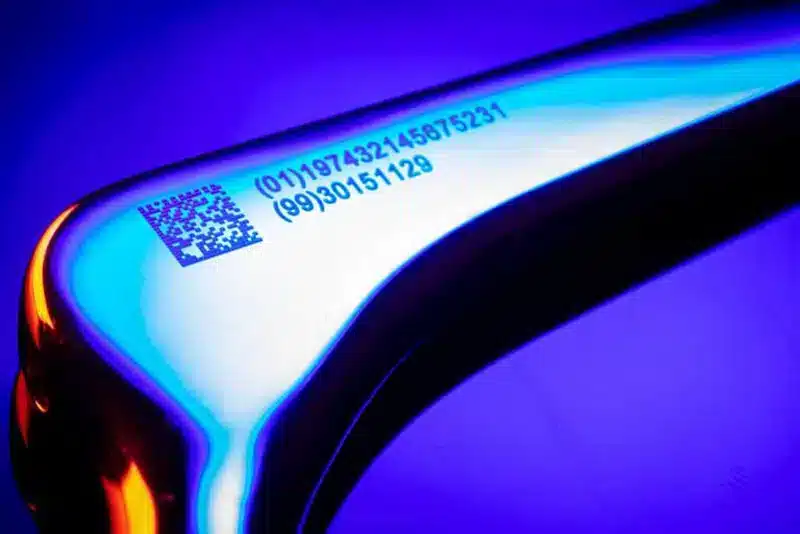
The durability of industrial marking depends directly on the direct marking technology used and its ability to withstand the real-world stresses the part will face throughout its lifecycle.
Choosing a permanent marking technology must take into account the material type, production conditions, post-marking operations, as well as long-term readability requirements, especially in industrial traceability and DPM marking applications.
Marking durability
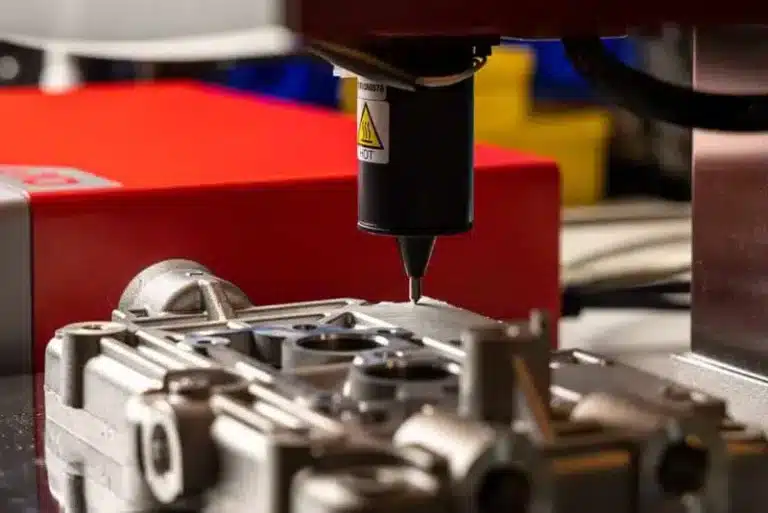
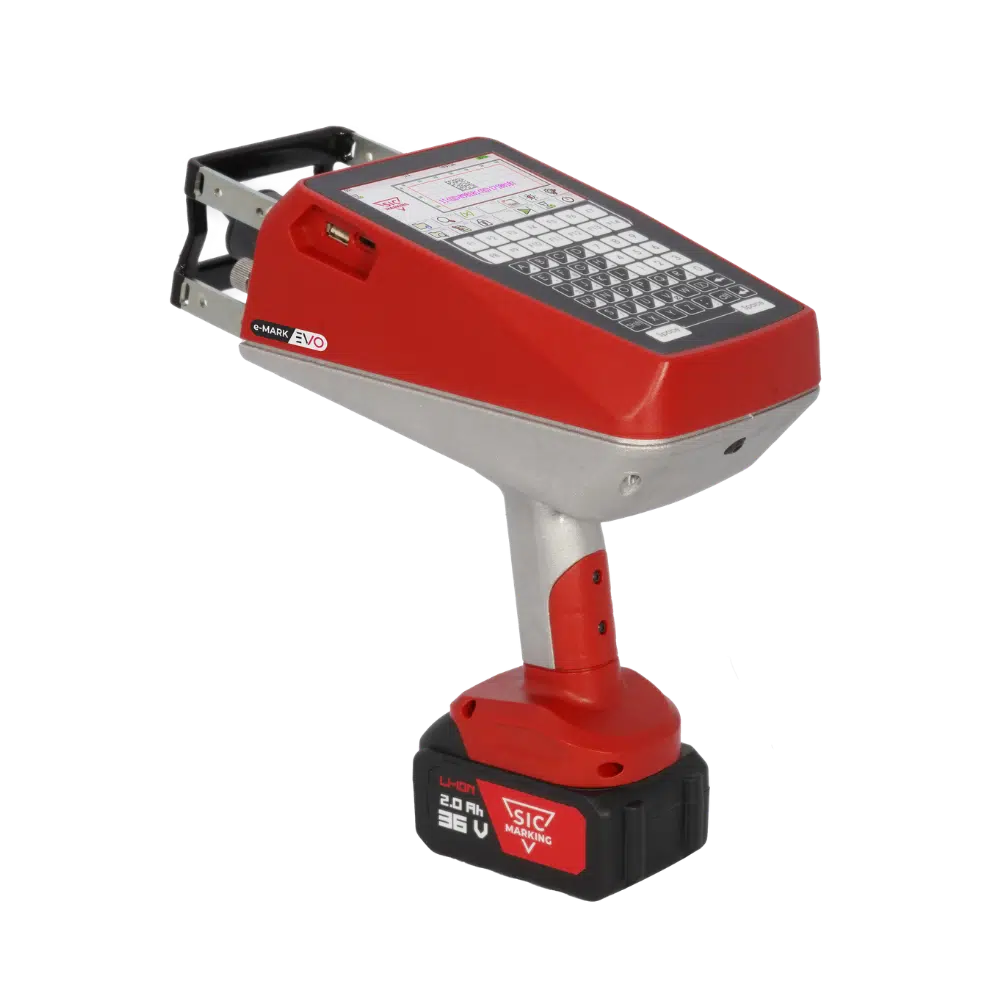
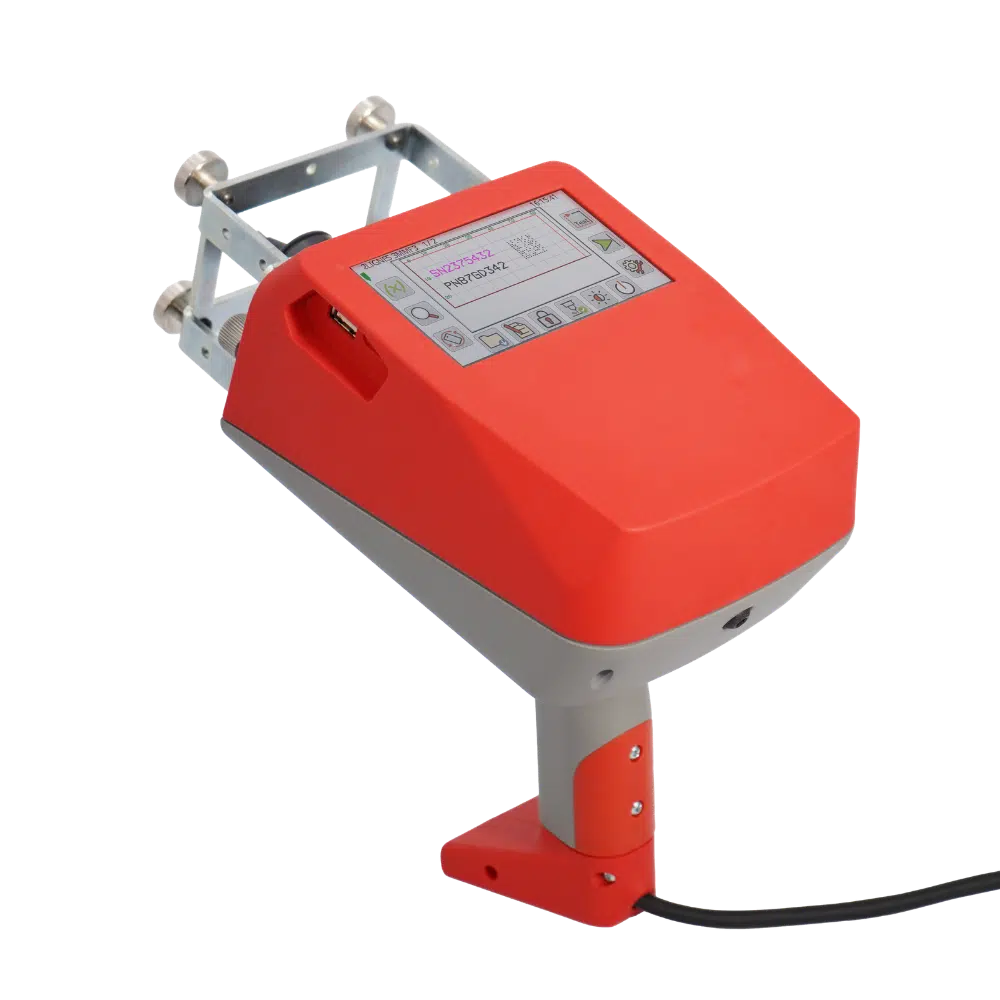
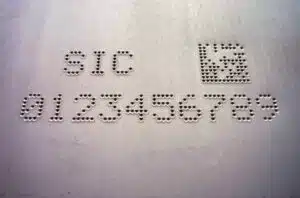
Dot peen marking is widely used in industrial sectors where parts are exposed to harsh operating conditions or significant mechanical stress, requiring a durable and permanent marking capable of ensuring long-term readability.
This industrial marking technology is particularly well suited for cast part marking, welded structures, chassis and body components, forged parts, machine components, large parts, as well as assemblies exposed to vibration, impact, or severe mechanical stress, where indented marking is required to ensure long-term readability.
In these applications, priority is given to marking resistance over aesthetics.
Dot peen technology produces a permanent and durable mark, even on raw, rough, or oxidised surfaces, where more superficial technologies may lose readability and compromise industrial traceability.
In applications requiring long-term industrial traceability, dot peen marking delivers a stable permanent mark capable of maintaining reading quality compatible with ISO requirements, automated systems, and DPM marking (Direct Part Marking).
Unlike scribing marking, which prioritises line regularity and quieter operation, dot peen marking produces a deeper mark that is more firmly anchored in the material, offering superior durability and better performance in the most demanding industrial applications where permanent indented marking is required.
Marking durability
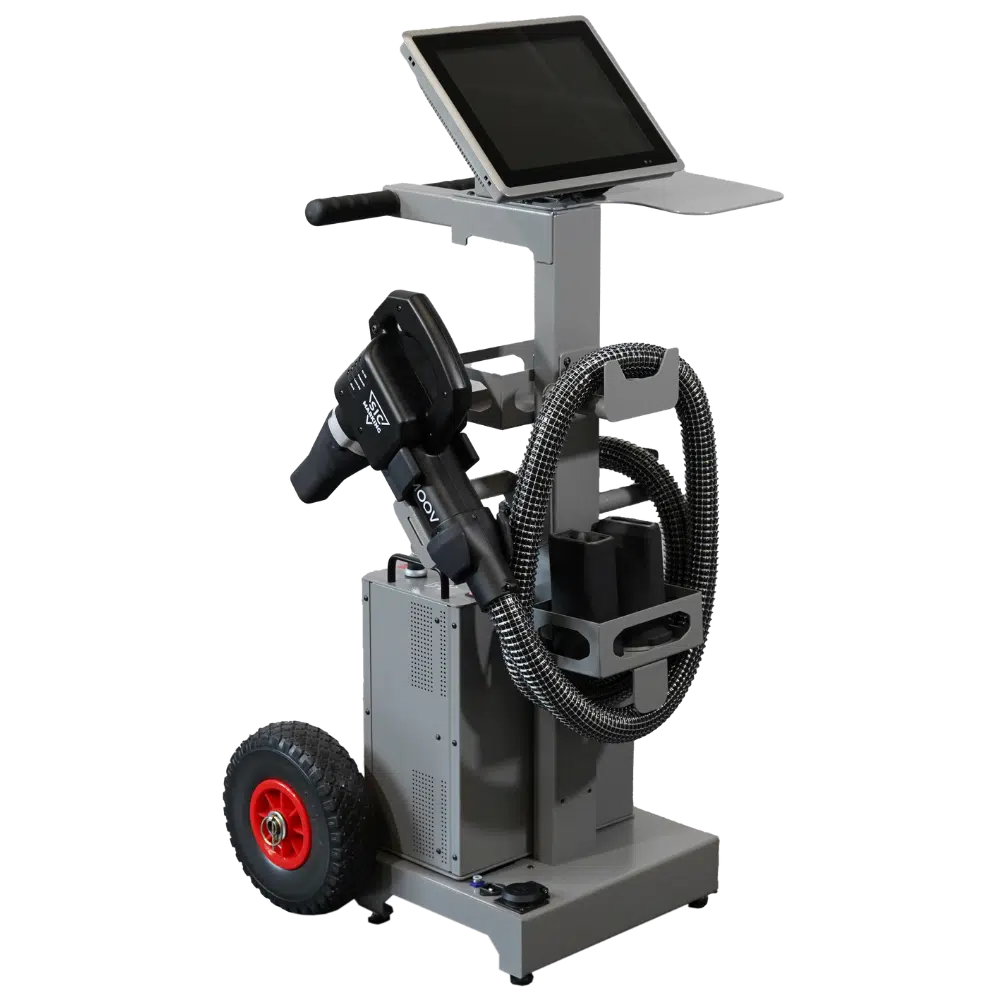
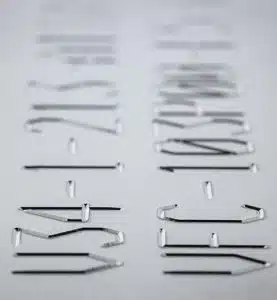
Scribing is an industrial marking technology that engraves permanent information by continuously dragging a stylus across the surface.
This permanent and durable marking method delivers excellent long-term performance thanks to a groove-based mark resistant to mechanical stress, while ensuring quiet operation suitable for demanding industrial environments and traceability applications.
Particularly well suited for machined mechanical parts and welded assemblies, scribing provides a robust industrial traceability solution for machine components exposed to severe mechanical stress. This technique ensures permanent and durable identification, even in harsh industrial environments where other marking technologies may lose readability.
This industrial marking method is a preferred choice for applications requiring long-term traceability without compromising the structural integrity of the marked parts or the marking stability over time.
Unlike dot peen marking, which favours deeper penetration for very harsh environments, scribing offers a balance between marking durability, surface finish quality, and long-term stability, while still delivering a permanent mark suitable for industrial constraints.
Marking durability
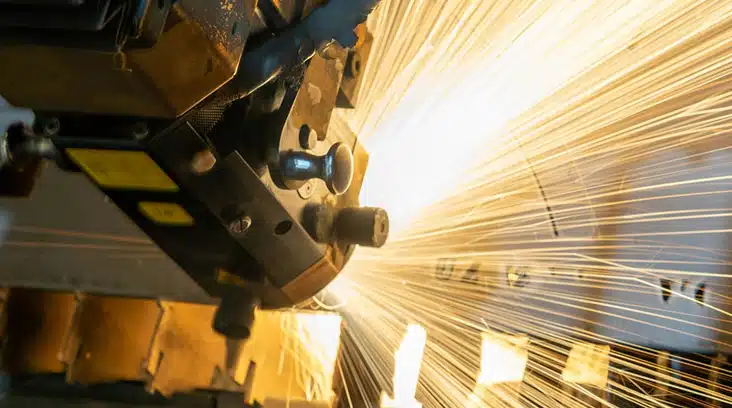
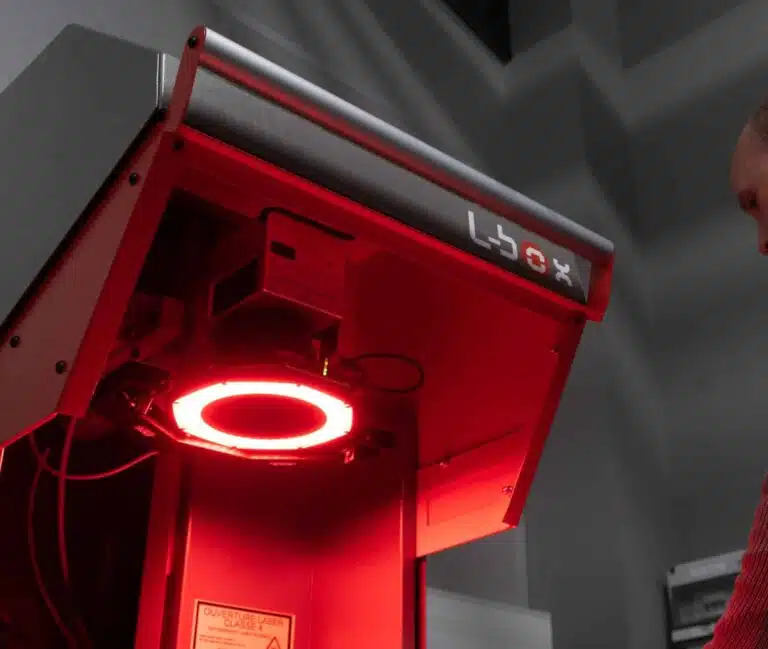
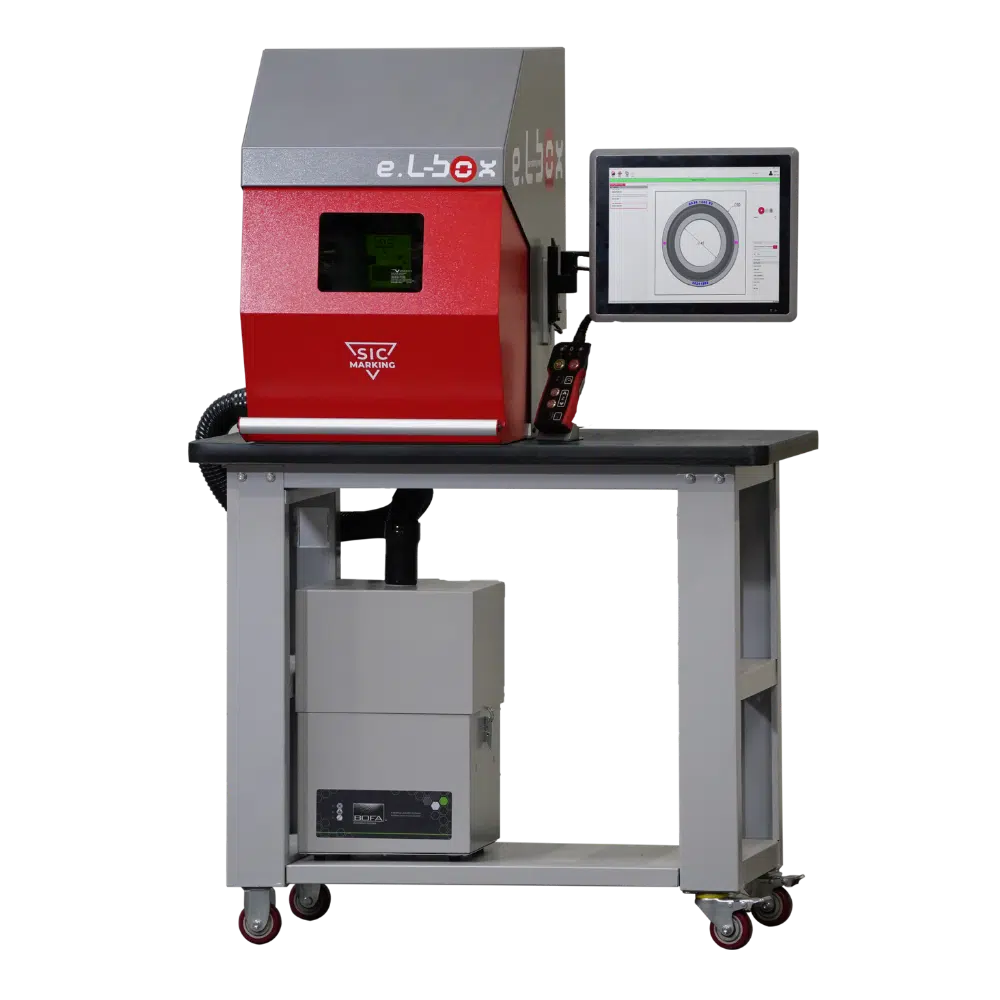
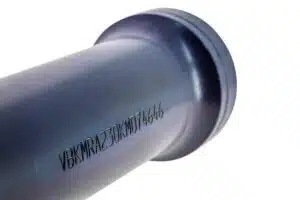
Fiber laser marking is a high-performance industrial laser marking solution, particularly effective when precision, repeatability, and reading quality are critical—especially for DataMatrix codes, DPM marking applications, and automated traceability systems.
Depending on the settings, a fiber laser can perform deep engraving, thermal annealing, surface ablation, contrast marking, or high-precision micro-engraving.
The selected process directly affects the durability of industrial marking under mechanical, chemical, or thermal stress, as well as the ability of the marking to remain readable over time.
Laser parameters must therefore be defined based on the material, post-marking operations, and operating conditions to ensure permanent marking and long-lasting readability aligned with industrial traceability and DPM marking requirements.
In demanding industrial environments, industrial laser marking technology is widely used for DataMatrix codes, serial numbers, logos, and technical identifiers requiring durable readability.
It is widely used in industrial traceability and DPM marking applications, particularly in the automotive, aerospace, electronics, medical, and precision engineering sectors where reading quality is critical.
A laser annealing marking produces clean, precise contrast without material removal but is more sensitive to abrasion or surface treatments, whereas ablation or engraving provides better long-term performance thanks to deeper surface modification, resulting in a more durable and permanent marking.
The durability of laser marking depends directly on the interaction mode chosen between the beam and the material.
In applications where mechanical resistance becomes a priority, engraved marking technologies such as dot peen marking or scribing may be preferred, as they provide deeper penetration into the material and improved long-term performance under severe mechanical stress.
The durability of industrial marking does not depend solely on the technology used.
It results from a combination of parameters related to the material, the marking process, machine settings, and the real operating conditions of the part, all of which determine the ability of the permanent marking to remain readable over time.
The durability of a marking is inherently linked to the nature of the material on which it is applied.
The choice of marking technology must be made based on the actual material, as the physical, mechanical, and chemical properties of the substrate directly influence marking depth, contrast, and long-term stability.
In industrial applications, marking durability is directly linked to the role the marking plays within the industrial traceability system.
Depending on the type of information marked on the part, durability requirements vary significantly.
A simple visual identifier does not require the same level of resistance as a DataMatrix code used in DPM marking, which must be readable automatically throughout the entire product lifecycle.
The required durability level must therefore always be defined based on the type of code, the reading method, production constraints, and traceability requirements.

Durability and traceability
Alphanumeric marking remains the simplest case in terms of industrial traceability.
A serial number, reference, or production identifier can remain usable even if contrast slightly decreases over time.
However, in industrial environments, parts may undergo repeated handling, friction, assembly operations, or surface treatments.
A marking that is too shallow can therefore become difficult to read, making identification more complex during inspection, maintenance, or quality control operations.
Even for text marking, sufficient depth must be ensured to guarantee long-lasting readability and permanent marking, especially when the part must remain identifiable throughout its entire service life.
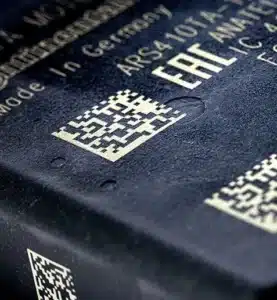
Durability and traceability
Requirements are significantly higher when marking is used for automated traceability, particularly with DataMatrix codes produced using DPM marking (Direct Part Marking).
In this case, the marking is not only intended to be seen, but to be read by machine vision systems.
Reading quality depends directly on code geometry, module consistency, marking depth, and contrast between marked and unmarked areas.
Partial degradation of the marking may be enough to make the code non-compliant, even if it remains visible to the naked eye.
Loss of contrast, surface wear, or deformation caused by processing can prevent automatic reading and lead to line stoppages, rejects, or identification errors.
In highly automated environments, DataMatrix marking durability therefore becomes a critical factor for production performance and the reliability of industrial traceability.
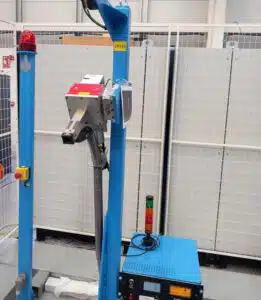
Durability and traceability
In automated production lines, marking is often used to identify parts at each stage of the manufacturing process.
The code must remain readable after machining, assembly, painting, heat treatment, or transport.
If the marking loses readability, the part may be rejected, misrouted, or not recognised by the traceability system.
This can lead to line stoppages, production losses, or errors in batch tracking.
In this context, marking durability must be defined as early as the process design stage, taking into account all steps the part will undergo in order to ensure permanent marking compatible with industrial traceability requirements.
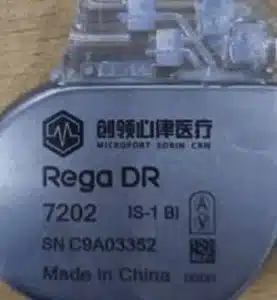
Durability and traceability
In many industrial sectors, marking is also essential to meet quality, certification, or regulatory compliance requirements.
It must be possible to retrieve a part’s origin, production batch, process parameters, or the operations it has undergone, sometimes several years after manufacturing, as part of the industrial traceability system.
During an audit or inspection, an unreadable marking can make traceability verification impossible and lead to non-conformities.
Marking durability becomes even more critical in the case of a product recall or post-incident investigation.
If the identification is no longer readable, locating affected parts becomes difficult, which can increase costs, complicate issue management, and jeopardize product compliance.
The choice of a durable industrial marking technology cannot be limited to the visual quality of the marking achieved at the time of engraving.
To ensure reliable readability over time, the marking process must be defined based on all constraints related to the part, its environment, and industrial traceability requirements.
A durable permanent marking is always the result of a trade-off between material, operating conditions, expected service life, and process constraints, in order to ensure stable identification throughout the product lifecycle.