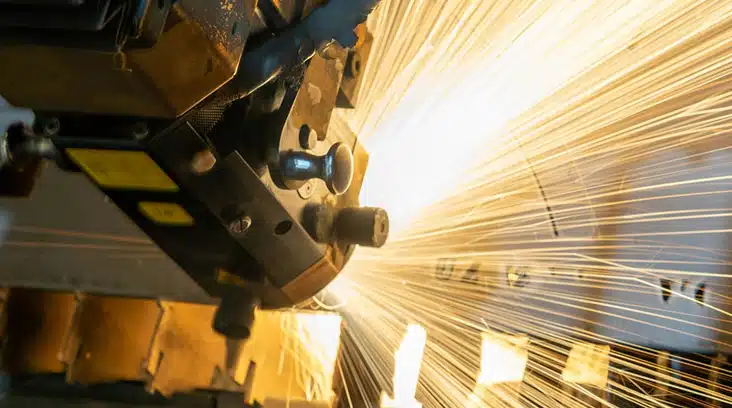
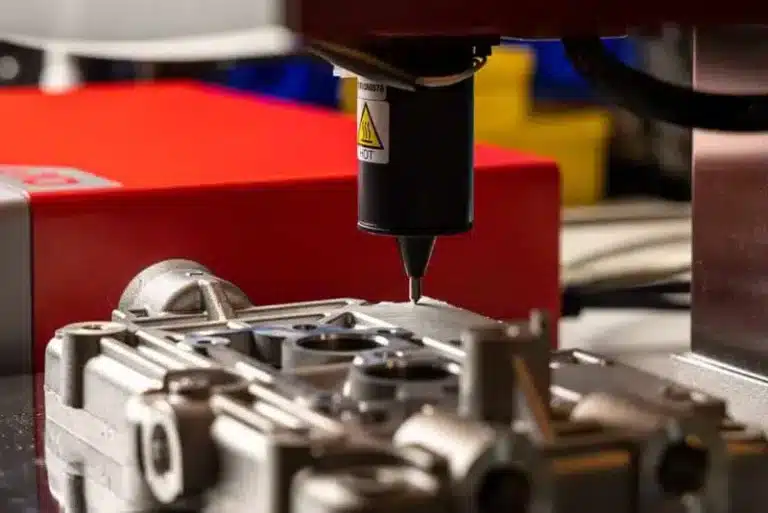
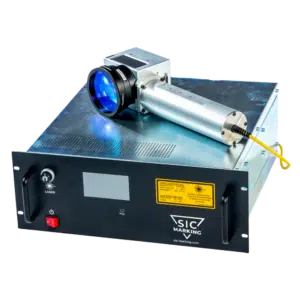
Steel laser marking provides permanent identification straight onto the surface of metal parts.
Used throughout a broad range of industries, this marking technology answers the rising demand for industrial traceability, serialisation and component tracking across the whole product lifecycle.
The precision of the fibre laser beam makes it possible to mark or to create hard-wearing laser engraving on steel, applying serial numbers, DataMatrix codes, QR codes, manufacturing references, logos or regulatory information onto a wide range of steel grades.
According to the process settings, the laser can generate either a straightforward surface contrast or a deeper laser engraving on steel able to resist demanding mechanical and environmental stresses.
Especially suited to traceability applications, steel laser engraving brings together precision, repeatability and compatibility with automated reading systems. It has become a reference solution for permanent steel marking across the automotive, aerospace, energy, rail and industrial machinery sectors.
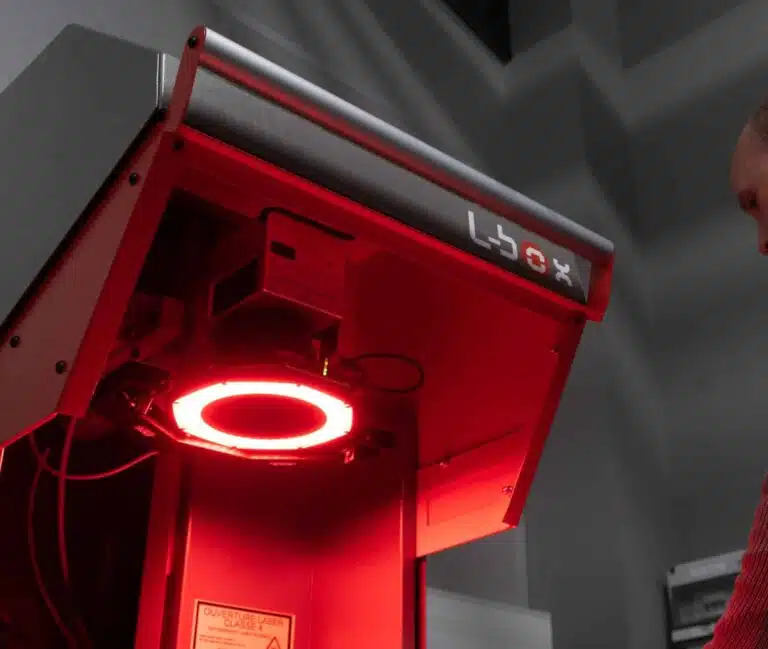
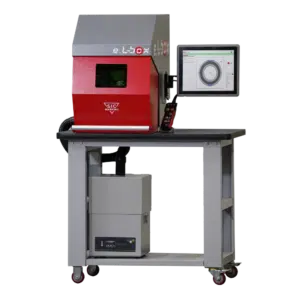
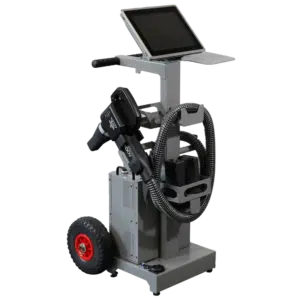
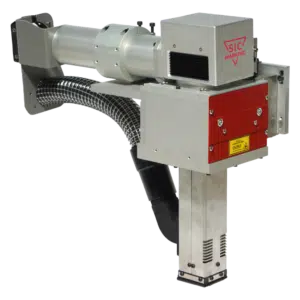
To address these needs, SIC MARKING has built a full range of industrial laser marking solutions that guarantee the permanent identification of steel parts — from stand-alone workstations through to systems built into production lines and automated cells dedicated to component traceability.
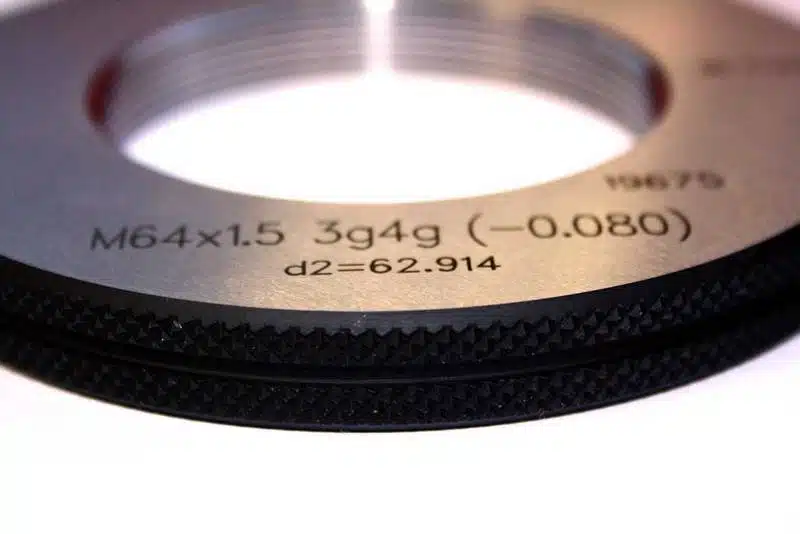
Identifying steel parts has become a major operational challenge across many industries. Whether the aim is to guarantee part traceability, satisfy quality control requirements or keep information legible throughout the product lifecycle, steel laser marking stands out as a marking solution designed for demanding industrial environments.
With its precision, repeatability and ability to deliver high-quality permanent marks, laser engraving on steel embeds production data straight into the material and keeps it legible through every manufacturing, assembly, inspection and maintenance operation.
Steel laser marking relies on the interaction between a high-energy laser beam and the surface of the material. When the beam is focused on the steel, the light energy is absorbed and turned into thermal energy, triggering different material transformations according to the marking parameters used.
Laser power, pulse frequency, scanning speed, spot size and the number of passes all directly influence the final result. According to the desired outcome, the laser can generate a simple visual contrast, locally alter the surface structure or perform true laser engraving on steel through material removal.
Steel laser marking is compatible with a very broad variety of industrial steels. However, the material’s response to the laser beam can vary according to its metallurgical composition, surface condition, treatments or the presence of coatings.
The accuracy of steel laser marking makes it possible to embed a broad variety of information directly onto parts for identification, traceability and production tracking.
Thanks to the fineness of the laser beam, alphanumeric characters, complex 2D codes and detailed graphic elements can all be produced with equal precision.
According to the application, laser engraving on steel can be used to guarantee unit-level part identification, streamline quality control operations, satisfy regulatory requirements or improve production flow management.
The terms steel laser marking and steel laser engraving are often used interchangeably. Yet they describe two different modes of interaction between the laser beam and the material.
Marking is the generic term covering every surface effect that can be achieved with a laser:
According to the parameters used, the laser can simply alter the surface appearance of the steel or remove a greater or lesser amount of material.
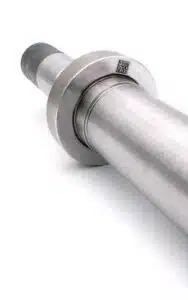
Laser marking on steel creates a visible contrast without necessarily producing a deep engraving in the material.
The beam’s action locally alters the part’s surface condition to produce a difference in colour, texture or reflectivity that makes the information visible. This process delivers excellent visual quality while minimising the impact on the component’s geometry and dimensional characteristics.
With its high precision, laser marking is particularly well suited to producing text, logos, serial numbers, part numbers, DataMatrix codes, and QR codes that require excellent read quality. It is also the right choice when traceability requirements must be balanced against strict cosmetic or functional constraints.
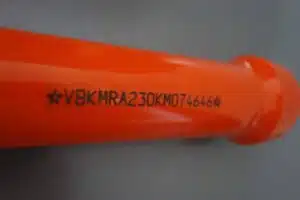
Steel laser engraving operates on a different principle.
The energy delivered by the beam melts and then locally vaporises part of the material, creating a recessed mark directly in the material.
This physical alteration of the surface delivers permanent identification with superior resistance to friction, abrasion, cleaning operations, surface treatments and harsh industrial environments.
Laser engraving on steel is the preferred choice when parts must keep their identification after years of service or when they are exposed to heavy mechanical stress.
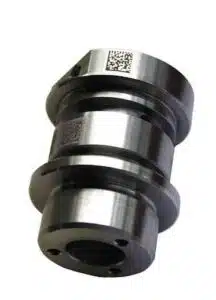
The choice between laser marking on steel and laser engraving on steel depends first and foremost on the environment the part will operate in and the level of durability required.
Where the priority is visual quality, fine detail or the readability of high-density 2D codes, contrast marking is often an effective solution. This approach is frequently used for mechanical components, precision parts, technical plates and applications requiring outstanding graphic definition.
Conversely, where the part is exposed to severe stresses such as abrasion, impacts, machining operations, surface treatments or corrosive environments, deep laser engraving generally offers better long-term performance.
Today’s fibre laser marking technologies offer the flexibility to produce both high-contrast marks and permanent engravings that satisfy the most demanding industrial requirements.
Beyond simple visual identification, steel laser marking now plays a central part in industrial traceability strategies.
Evolving quality control requirements, industry regulations and process automation are pushing manufacturers to embed ever more information directly on their parts using DataMatrix codes.
Combined with fibre laser technology, the DataMatrix enables unit-level identification of every component while streamlining its automated reading at every stage of the product lifecycle.
This combination is now one of the most widely used solutions for DPM marking (Direct Part Marking) on steel parts.
Discover our flagship laser marking equipment, from our portable machines and line-integrable modules through to our standalone marking stations.
Contact us
Need information?
Speak to one of our experts!