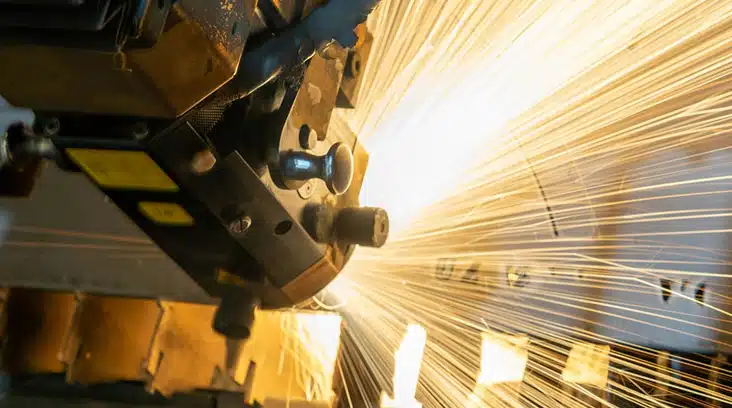
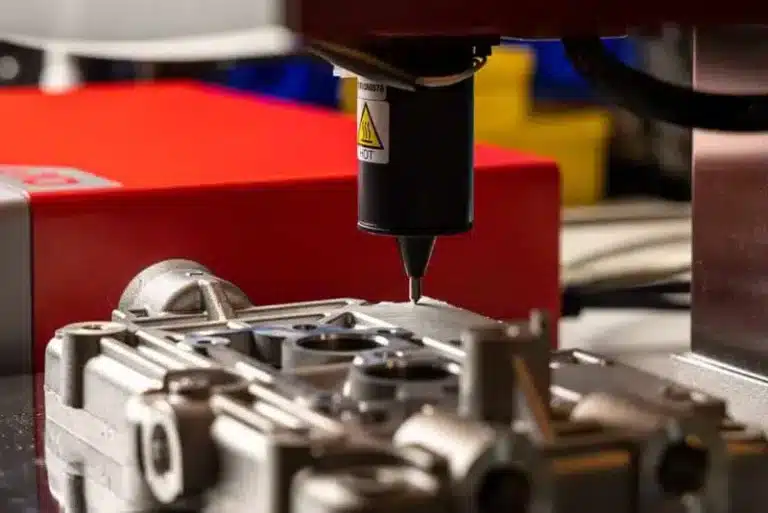
Laser engraving is a reference technical solution to meet the requirements of traceability, compliance, and efficiency in industrial processes.
It meets the marking needs of many sectors – including aerospace and space, the food industry, the medical sector, and the automotive industry – as well as the specific characteristics of a wide range of materials, such as metals, plastics, and composites.
Laser technology ensures a permanent, precise, and perfectly readable mark, without altering the mechanical integrity of the parts.
This permanent marking provides an optimal balance between engraving depth, contrast, and aesthetic appearance.
Integrated into production lines, laser marking plays a major role in process automation.
It enables the synchronization of marking with production flow, reducing downtime, errors, and operating costs, while increasing productivity.
In addition, laser marking ensures the indelible marking of critical data (serial numbers, DataMatrix or QR codes) and guarantees compliance with traceability standards (CE, UDI).
The consistent marking quality and the absence of consumables make laser marking a highly efficient and sustainable solution for industry.
To ensure repeatable production and compliance with the highest quality standards, SIC MARKING bases its laser expertise on extensive preliminary testing.
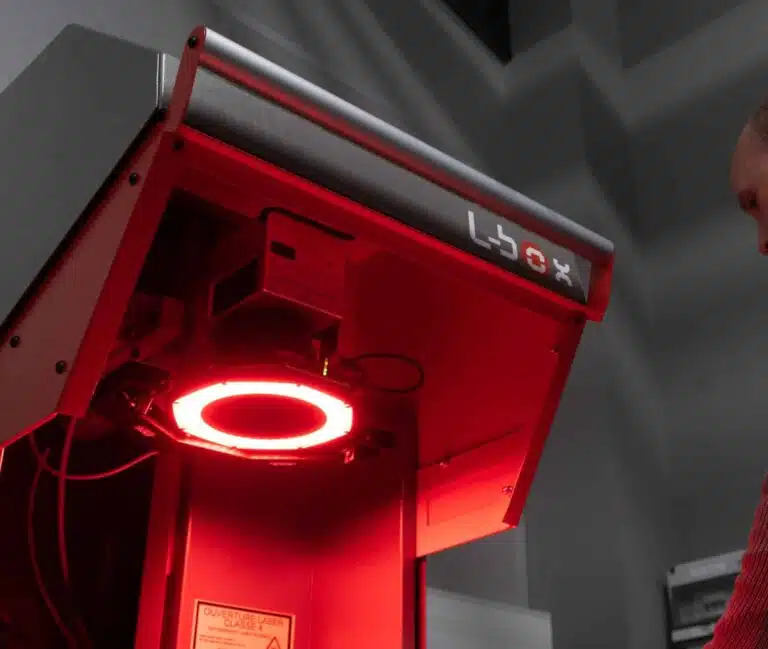
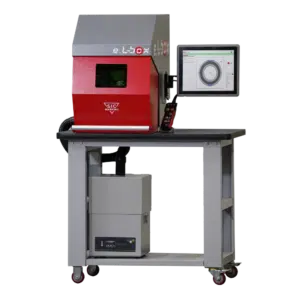
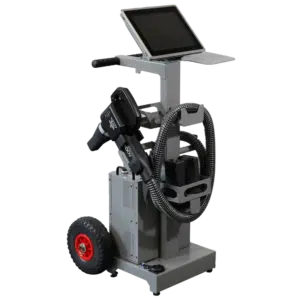
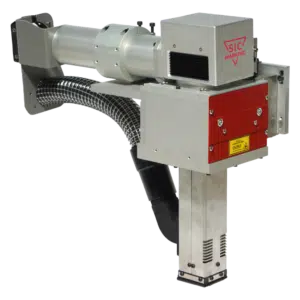
Depending on the customer processes, SIC MARKING offers both integrated laser marking systems and standalone laser engraving machines.

Industrial laser engraving meets several essential requirements:
Regulatory compliance and quality standards
Optimization of manufacturing processes
Durability and environmental sustainability
On materials such as stainless steel, anodized aluminum, or titanium, industrial laser marking delivers precise and durable contrast, offering numerous aesthetic possibilities.
This process ensures a consistent, high-quality appearance, ideal for both technical components and premium design elements.
Because laser marking requires no consumables, consistent mass-production quality is guaranteed: the depth, shade, and texture of the marking remain identical.
This helps reduce touch-ups, maintenance costs, and scrap rates—a major advantage for industrial manufacturing.
High-quality laser marking enhances the perceived value of the product.
A precisely engraved logo on a visible part provides a premium finish and highlights the manufacturer’s technological expertise—a decisive asset in demanding sectors such as aerospace, watchmaking, the medical sector, and precision electronics.
For metals, plastics, and specific materials, laser marking must ensure optimal compatibility between the laser and the material.
It must deliver permanent marking that is resistant to wear, corrosion, and high temperatures, while providing excellent contrast on polished or matte surfaces—without weakening the material.
The choice of wavelength and laser power (fiber, UV, or green laser) is crucial to preserving the i
Laser marking ranks as a technical solution of choice for satisfying traceability, compliance and efficiency requirements within industrial processes.
It serves the marking needs of a great many sectors – among them aerospace and space, the food and drink industry, the medical sector and the automotive industry – together with the specific characteristics of a broad spectrum of materials, from metals and plastics through to composites.
Laser technology guarantees a permanent mark that is precise and perfectly legible, with no impact on the mechanical integrity of the parts.
This permanent marking achieves an ideal balance of engraving depth, contrast and aesthetic finish.
Built into production lines, laser marking acts as a key driver of process automation.
It delivers the synchronisation of marking with the production flow, cutting downtime, errors and operating costs while lifting productivity.
What is more, laser marking provides the indelible recording of critical data (serial numbers, DataMatrix or QR codes) and upholds compliance with traceability standards (CE, UDI). Its consistent mark quality and freedom from consumables make laser marking an efficient, sustainable choice for industry.
To guarantee repeatable production and adherence to the most exacting quality standards, SIC MARKING underpins its laser expertise with in-depth preliminary trials.
In line with each customer’s process, SIC MARKING offers integrable laser marking systems as well as standalone laser engraving machines.
Industrial laser marking answers a set of essential requirements:
Part traceability and identification
Compliance with regulations and quality standards
Streamlining manufacturing processes
Durability and environmental performance
Material flexibility and compatibility
Visual quality and brand identity
On materials such as stainless steel, anodised aluminium or titanium, industrial laser marking yields accurate, long-lasting contrast together with a wealth of aesthetic options.
The process guarantees a uniform, high-grade appearance that suits technical components and premium design elements in equal measure.
With laser marking requiring no consumables, uniformity across series production is a given: mark depth, shade and texture remain unchanged.
That trims rework, maintenance costs and scrap rates – a telling advantage for industrial manufacture.
A laser mark of the highest quality lifts the perceived value of the product.
A logo engraved to fine tolerances on a visible part imparts a premium finish and puts the manufacturer’s technological credentials on show – a decisive edge in exacting fields such as aerospace and space, watchmaking, the medical sector and precision electronics.
For metals, plastics and speciality materials, laser marking has to guarantee optimum compatibility between laser and material.
It must produce a permanent mark that stands up to wear, corrosion and high temperatures, while giving excellent contrast on polished or matt surfaces – without weakening the material.
The choice of laser wavelength and power (fibre, UV or green laser) is pivotal to preserving material integrity and providing dependable industrial traceability, alongside a fine finish and compliance with legal standards.
our solutions
Contact us
Need information?