Case study
Expertise in high-performance alloys
A business specialising in industrial boilermaking and high-performance alloy machining, which supplies critical components to the aerospace, space, energy and cryogenic sectors.
Traceability in outdoor conditions
Material traceability is critical for raw bars kept outside, where felt-tip or label identification simply did not stand the test of time.
Bringing the marking to the workpiece
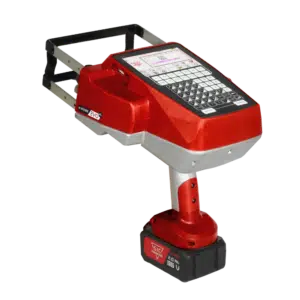
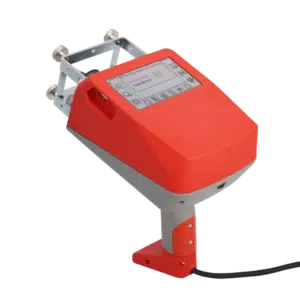
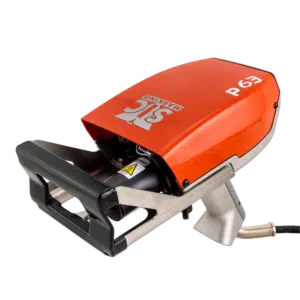
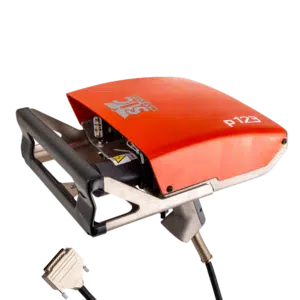
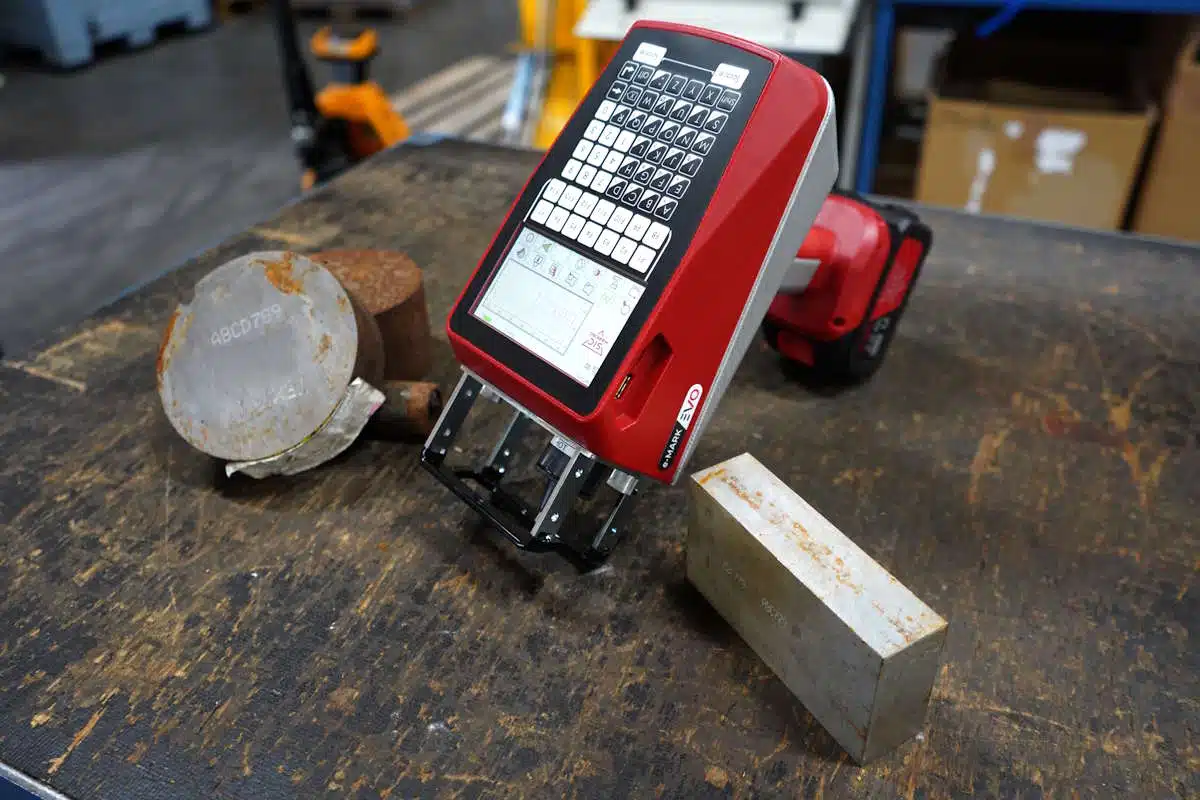
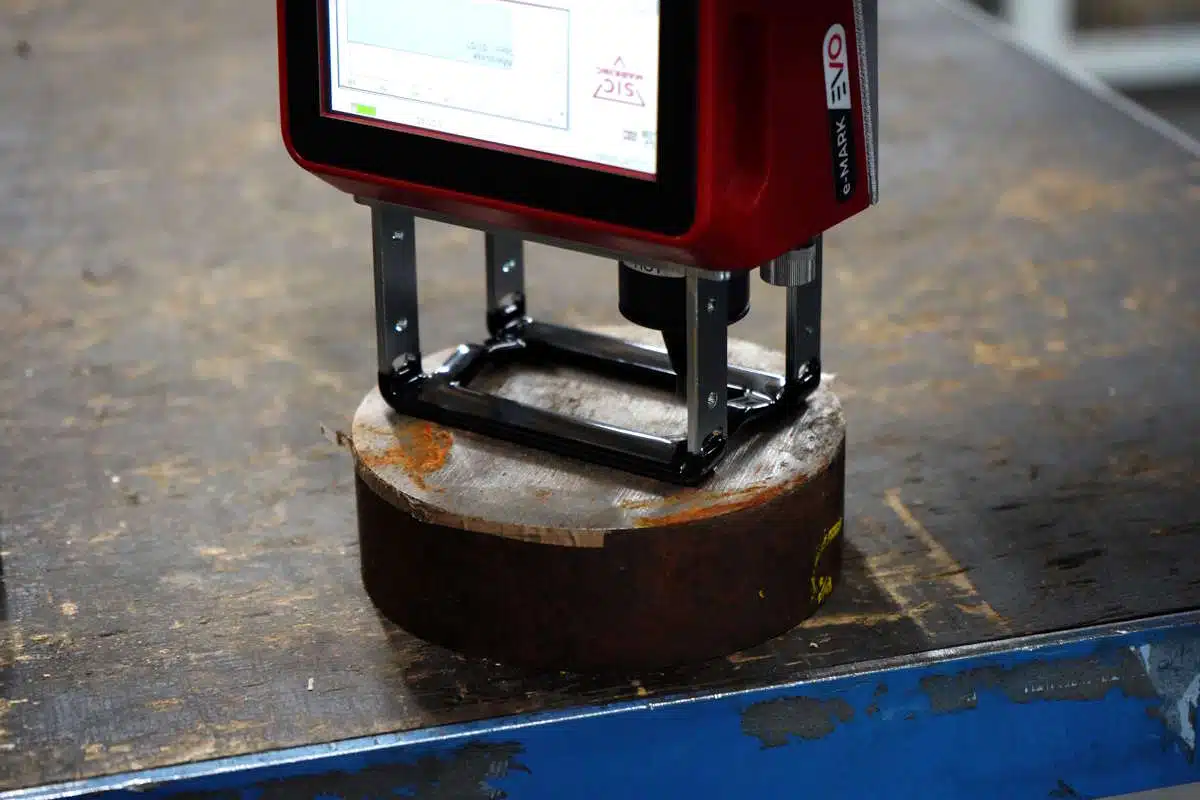
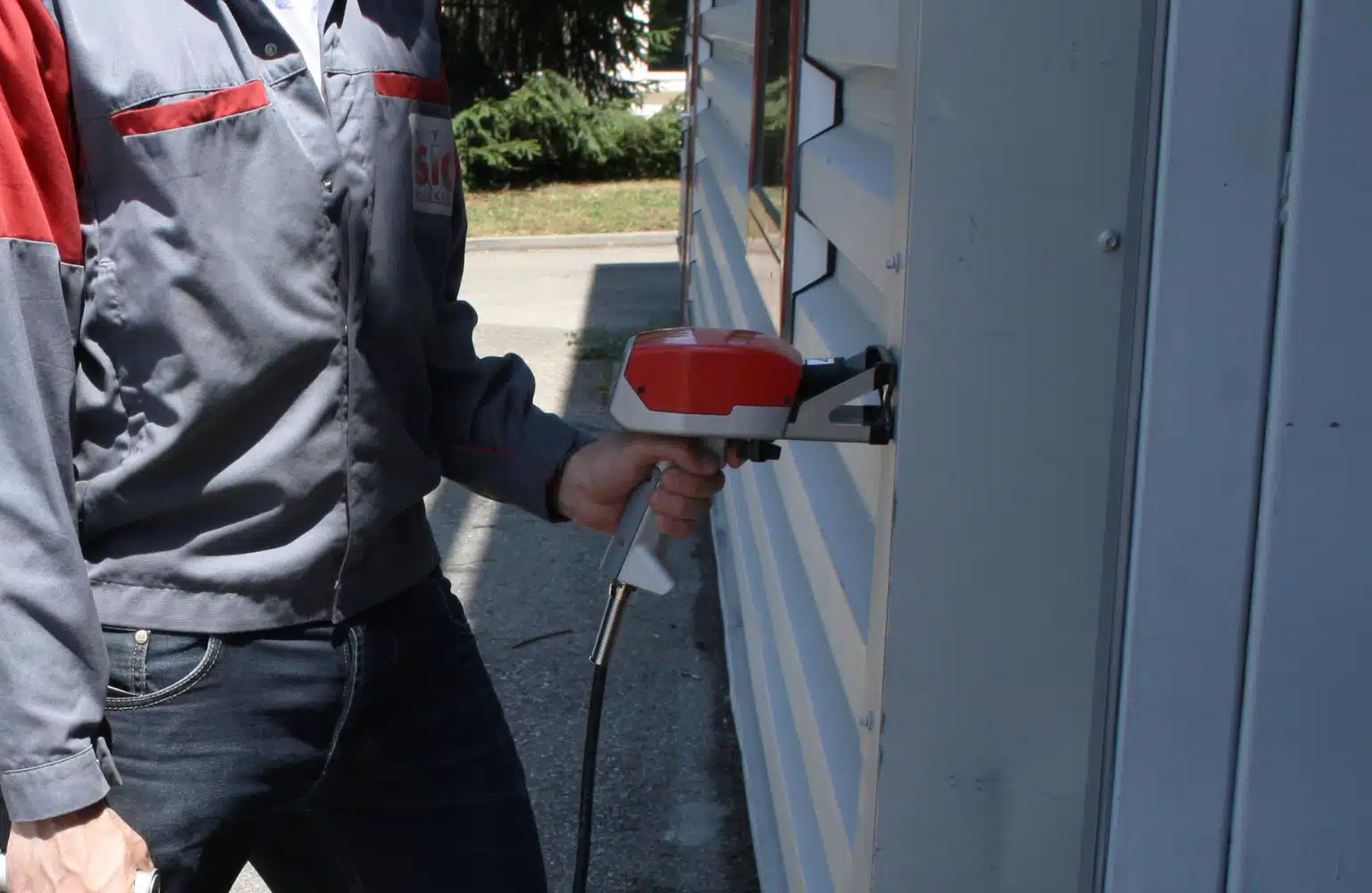
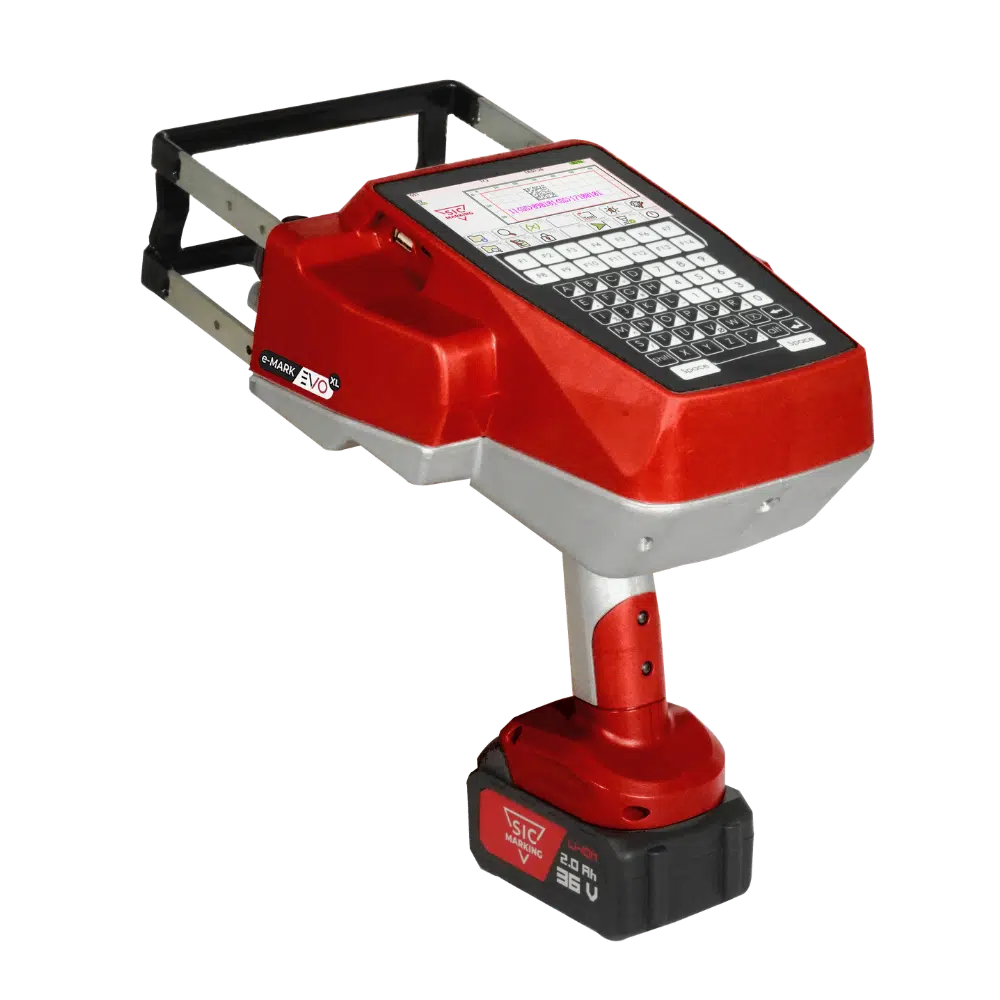
e-MARK EVO portable dot peen marker: the unit is carried to the bar, so long, heavy workpieces no longer need to be moved to a fixed station.
Engraving on hard alloys
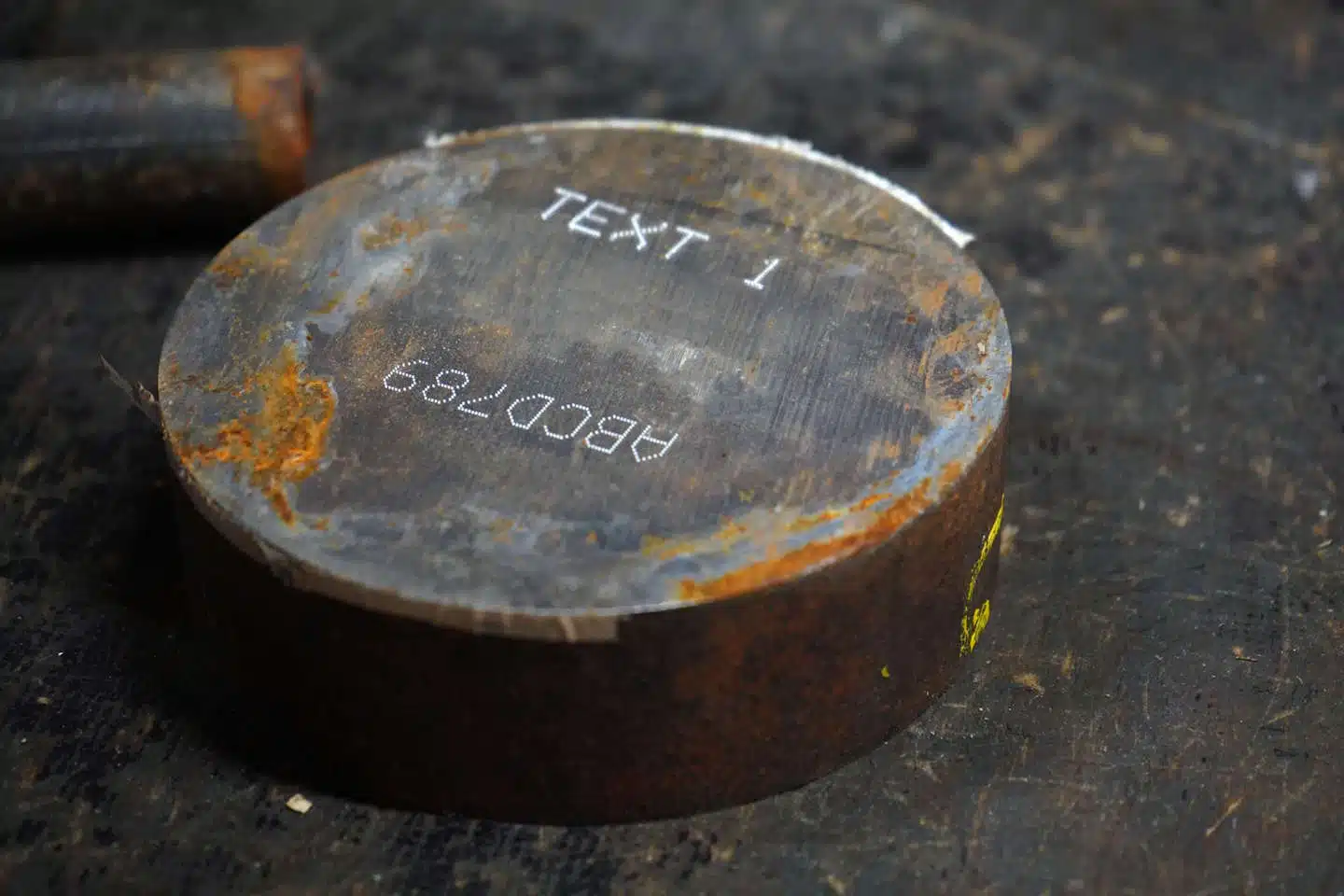
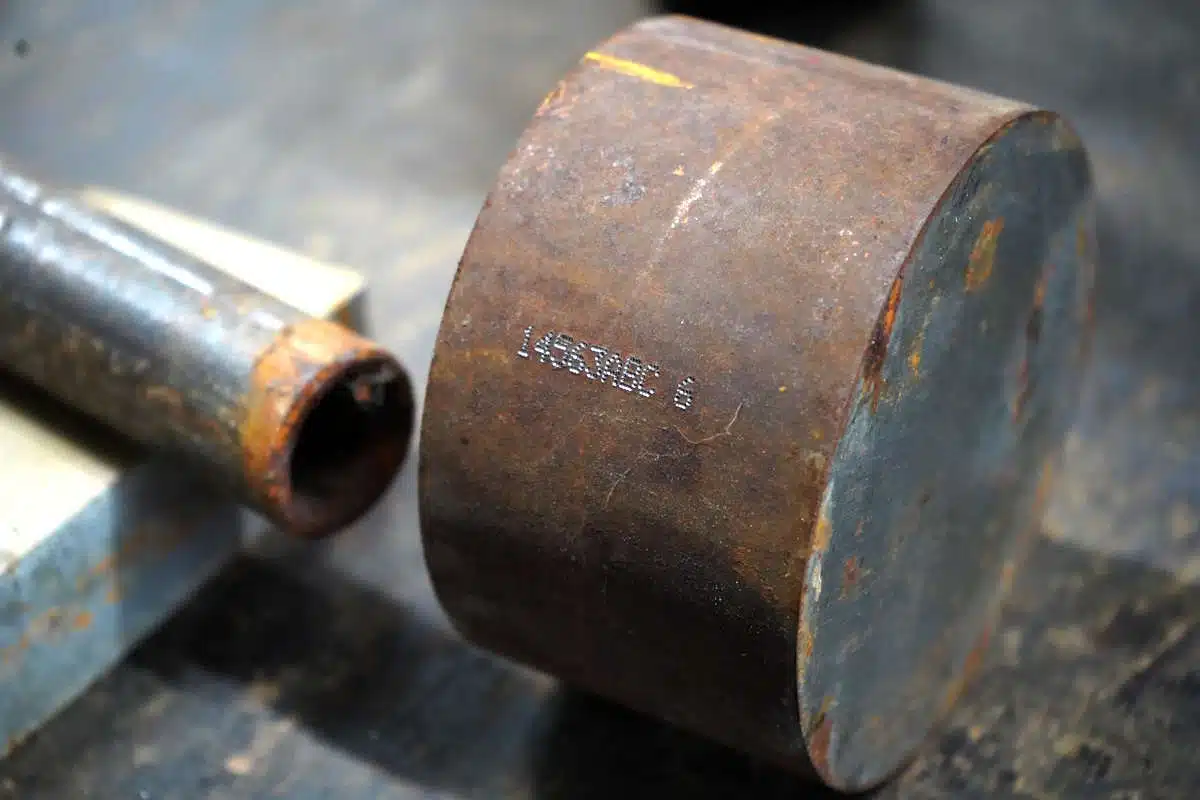
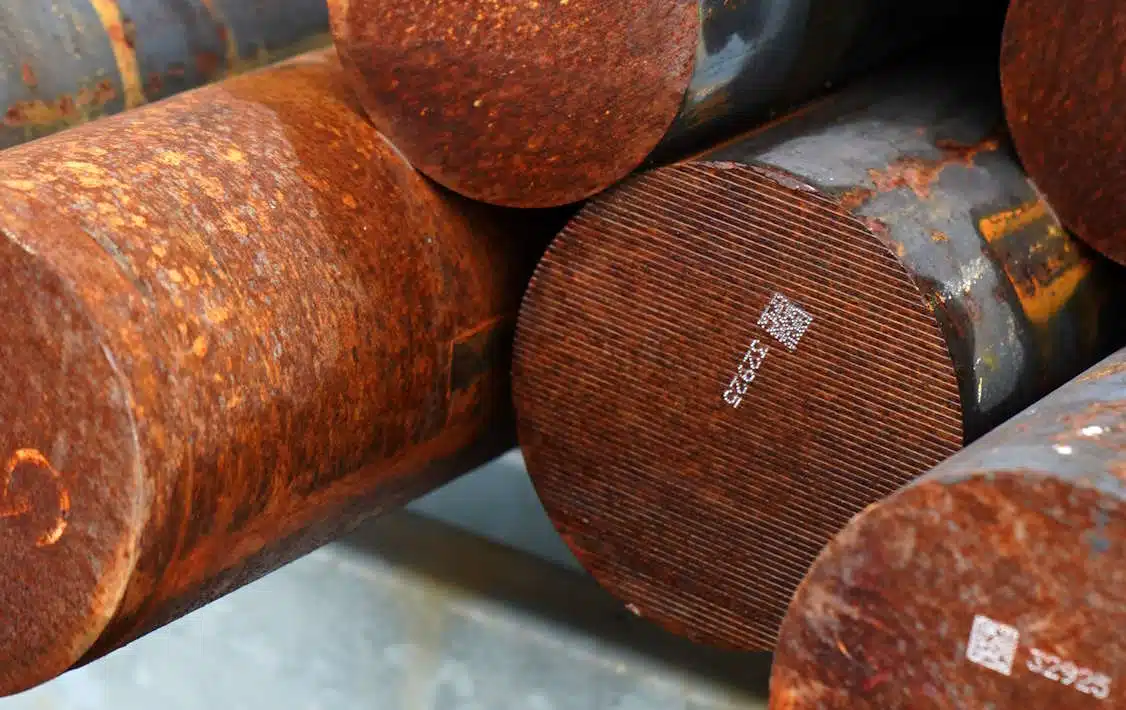
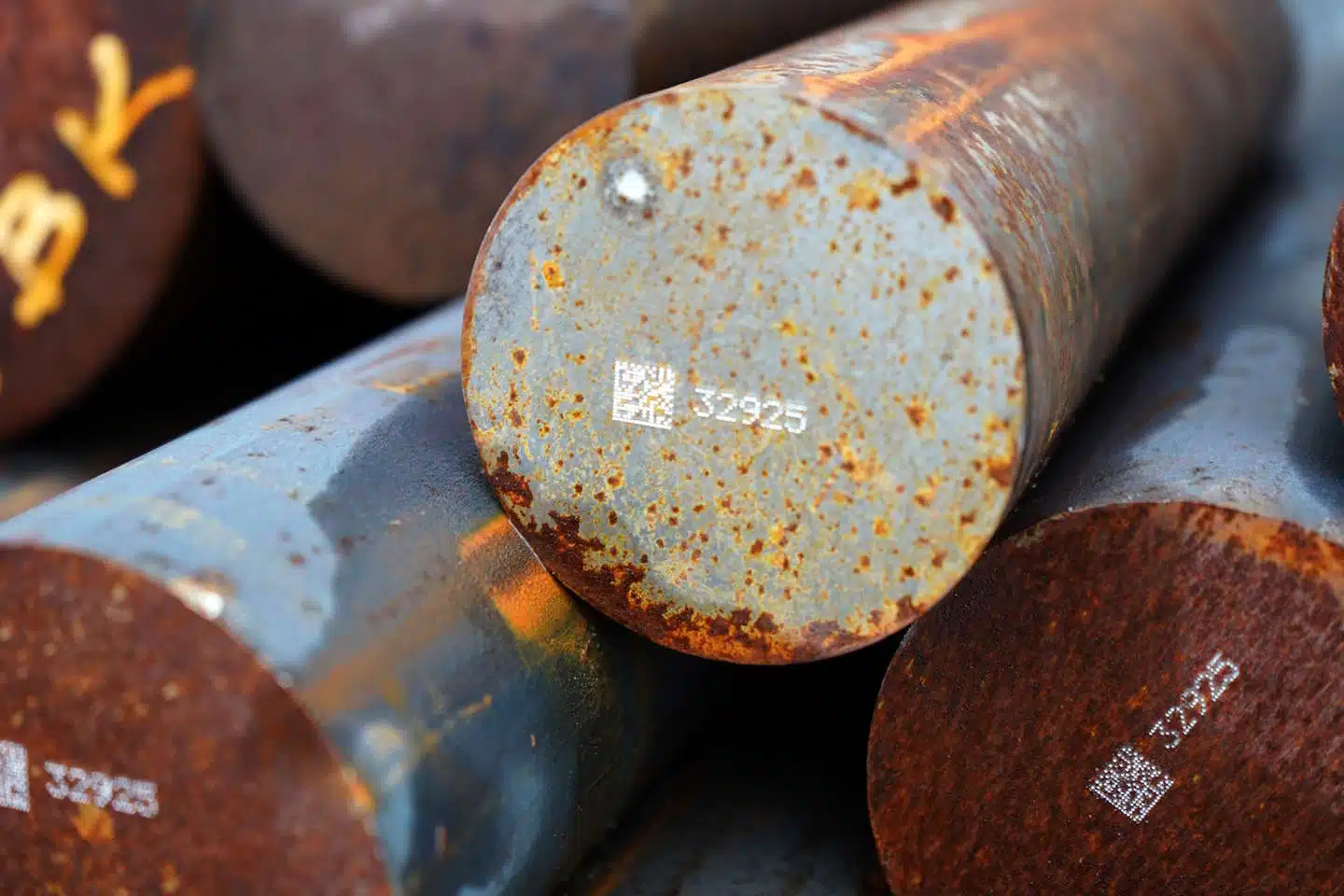
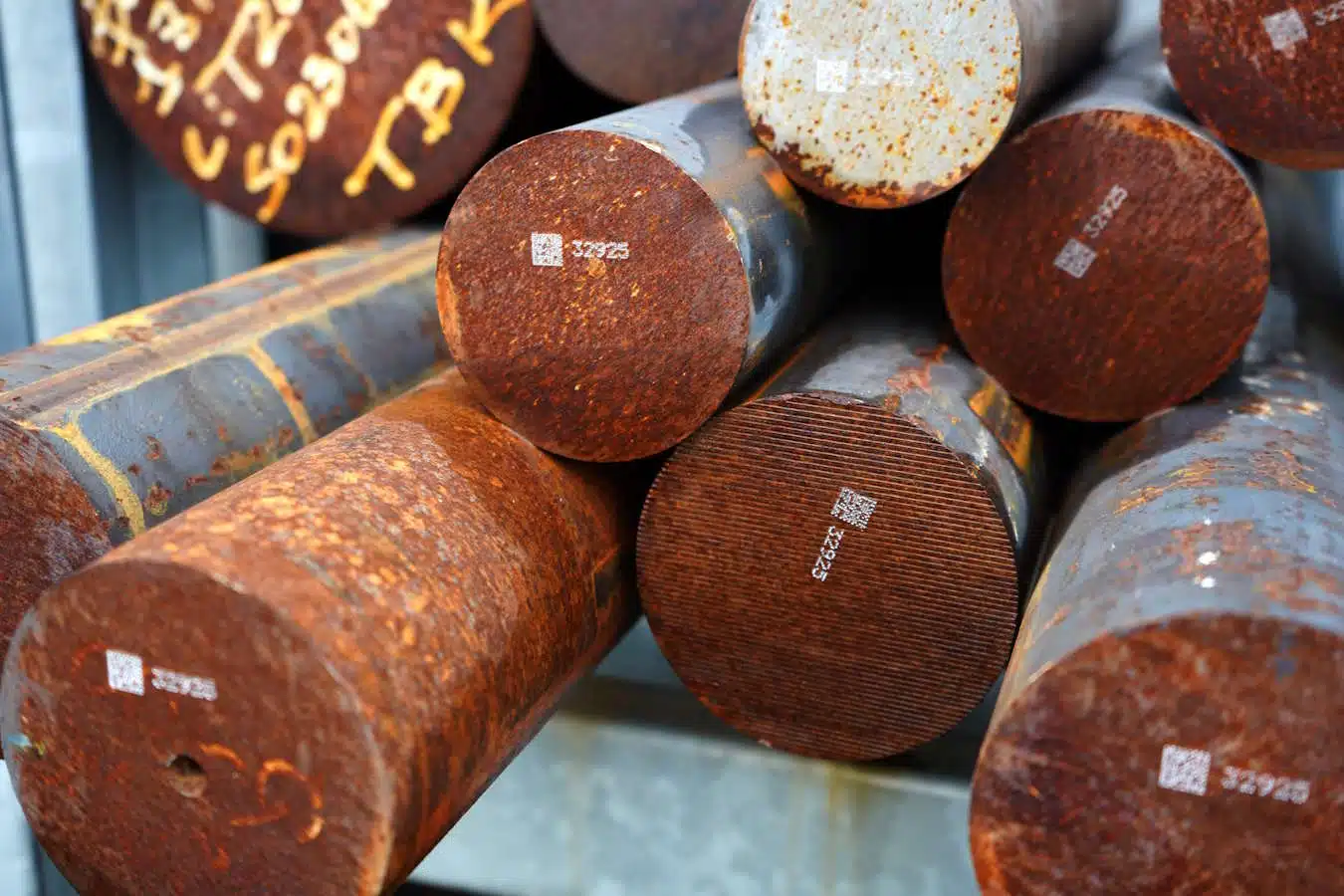
Mechanical-deformation marking of stainless steel, Inconel and other hard alloys, materials on which dot peen marking delivers a deep engraving that remains readable.
Our client is a company specialising in industrial boilermaking and high-performance alloy machining, working mainly for the aerospace and nuclear sectors. Its production calls for materials such as steel, stainless steel and Inconel, which are supplied as large-section raw bars and held in an outdoor storage yard before machining. Every bar has to remain identifiable at all times (serial number, material reference, batch) so as to guarantee the traceability required by businesses in this field.
Initially, the raw bars were identified using a felt-tip pen or with labels fixed to the bar ends. In the outdoor yard, ink wears away and labels degrade. The practical consequence was that bars were left without any visible identification and the exact grade of material was no longer directly legible, which is not acceptable when machining aerospace alloys, where material traceability governs compliance.
A number of constraints shaped the choice of solution:
In short, the need was for permanent marking of large-dimension bars that could be carried out directly outside, with no movement of the workpiece and no dedicated infrastructure.
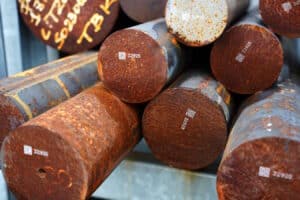
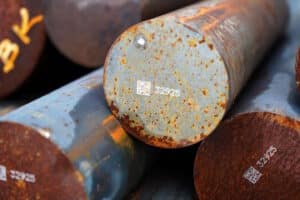
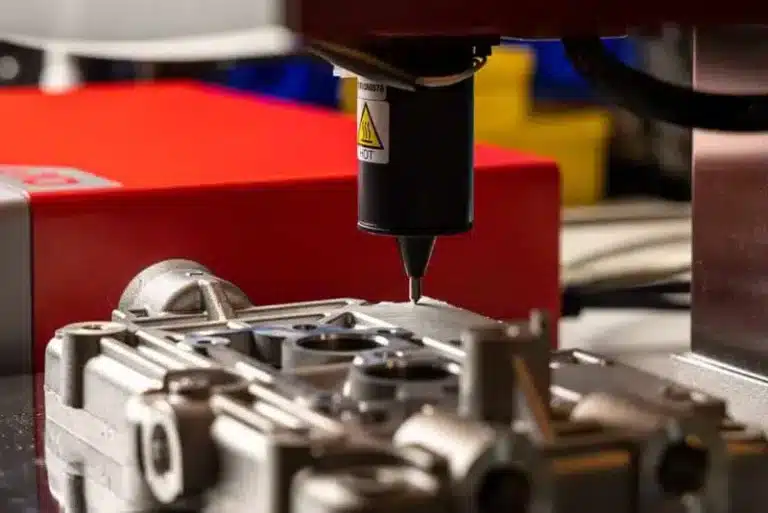
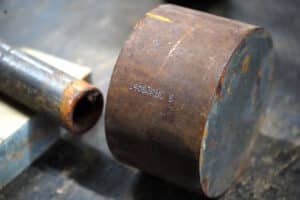
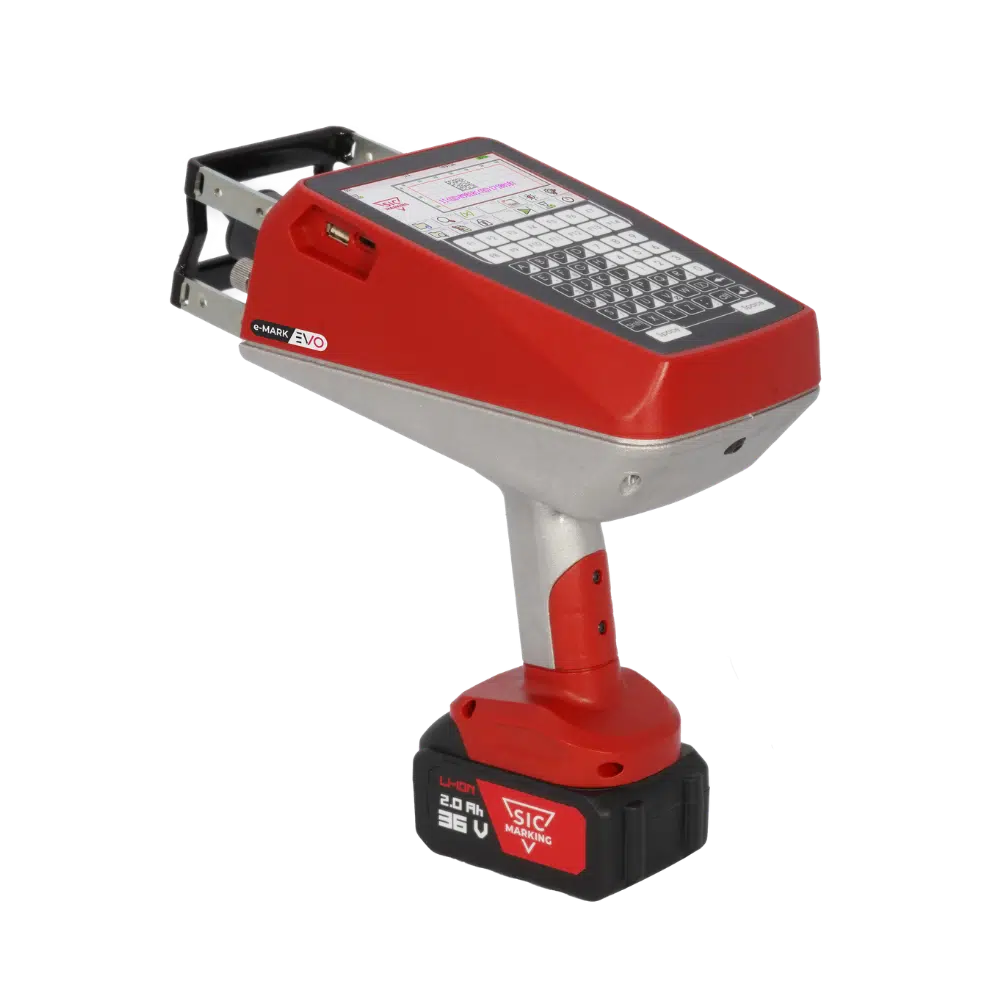
The client therefore opted for the e-MARK EVO, a portable dot peen marking machine in its standard configuration. Dot peen marking mechanically deforms the material: the marking is engraved into the bar rather than applied to its surface. Whether on stainless steel or Inconel, the result remains legible in the long term, including after extended exposure to the elements.
The e-MARK EVO‘s portable format resolves the principal logistical constraint: the operator takes the unit to the bar, be it in the outdoor storage yard or on the shop floor. A workpiece several metres long no longer has to be moved to a fixed marking station. One machine meets all the marking needs for large-dimension workpieces, alongside the laser already in use for small components produced in large batches.
As the equipment is a standard item from the SIC MARKING catalogue, no bespoke development was needed: the solution could be commissioned rapidly, at a cost consistent with small and medium batch production.
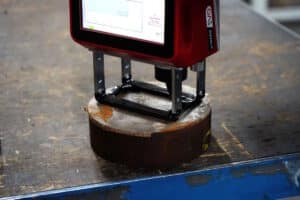
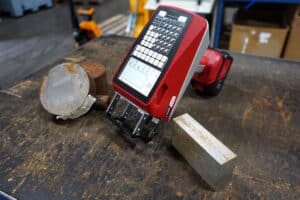
The raw bars now bear a permanent marking made directly at the location where they are stored or used. Material identification is no longer reliant on a felt-tip pen or label surviving over time. The pairing of dot peen marking with the portability of the e-MARK EVO corresponds precisely to the usage profile (limited batches, long workpieces, hard materials, outdoor environment) without over-specifying the investment.
Our solutions
Discover our products
Discover our flagship laser, dot peen and scribing equipment, from portable markers and in-line integrable modules to standalone marking stations.

Would you like to know more?
Get in touch!